Projects / Master's coursework
Fraud detection
Scoring bank transactions for fraud
Summary
170,884 transactions, 0.17% of them fraud, scored by area under the precision-recall curve. So far it reaches 0.696 against the 0.567 starting baseline; the final version is due on 29 October. Team of 3.
The task
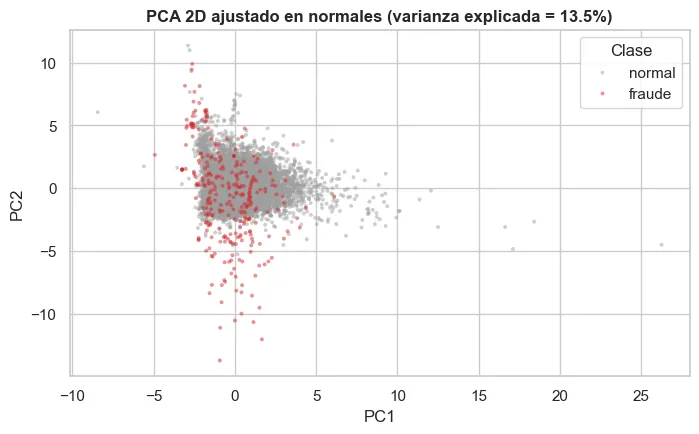
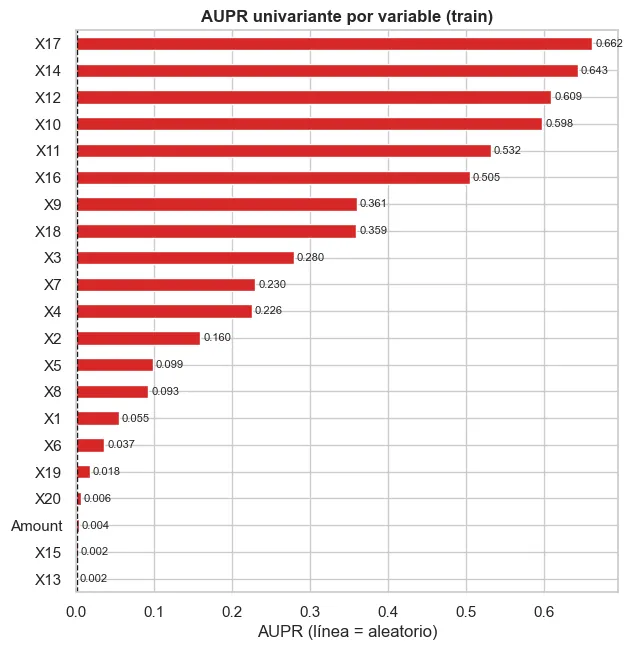
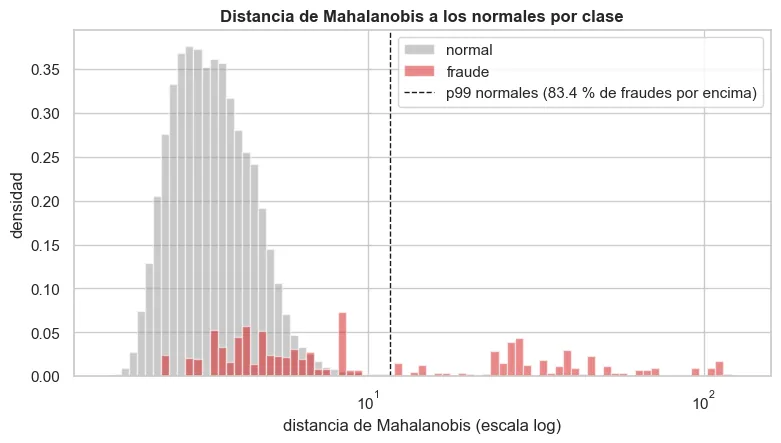
Give every bank transaction a fraud score, judged by the area under the precision-recall curve on a production file we can't see. The labelled set has 170,884 transactions with anonymised variables, and only 295 of them, 0.17%, are fraud. A shared notebook cell fixes the split, the folds and the scaling inside each fold, so every team member's score is comparable.
So far
A 10-component Gaussian mixture with a log amount and an amount-frequency feature reaches 0.696, against the 0.567 starting baseline. With only 89 frauds in the test set, differences of 0.05 aren't conclusive, so cross-validation decides. The final version is due on 29 October.
Figures